
Everything Old Is New Again
Why the Past Is the Most Powerful Product Right Now

Open your Instagram right now. I’ll wait.
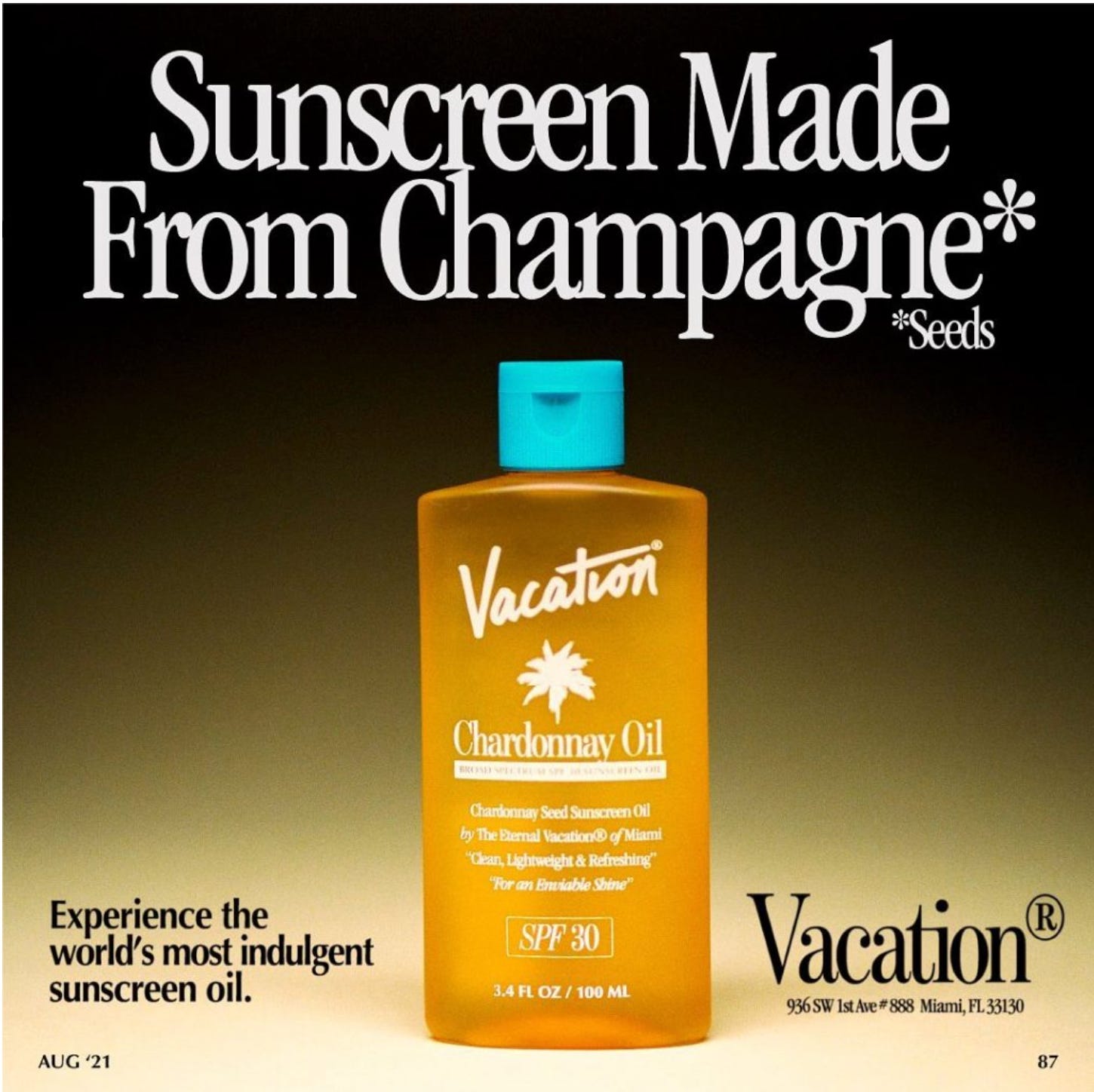
There’s a good chance you just scrolled past a campaign that looked like it was shot on a VHS camera, a fashion brand showing wide-leg jeans that your mother wore in 1993, a graphic tee with typography that belongs on a New Balance ad from 1987, or a skincare brand packaged to look like it came out of an old pharmacy. You noticed it. Maybe you even saved it.
Here is the uncomfortable question: why?
We live in the most technologically accelerated moment in human history. AI is rewriting how we work, think, and create. And yet the most commercially potent aesthetic movement of this decade is one long, loud look backwards. The 80s are back. The 90s never left. Y2K has been reimagined, repackaged, and resold to people who were in diapers when it happened the first time.
This isn’t a coincidence. It isn’t just the fashion industry running out of ideas. And it isn’t simply clever brand strategy, though it is certainly that too. What’s actually happening is something deeper: a mass psychological event suited up as a design trend. I’ve been thinking about this a lot lately, and the more I pull at the thread, the less it looks like aesthetics and the more it looks like a coping mechanism.
The World Got Scary. So We Bought Our Childhoods Back.
There’s a concept in psychology called the self-continuity function of nostalgia. The idea is straightforward: when the present feels unstable, chaotic, unfamiliar, anxiety-inducing, human beings instinctively reach for something that reminds them of who they were before things got complicated. They reach for the past. Not because the past was necessarily better, but because it feels known. And known feels safe.
This isn't just aesthetic preference. It's a coping mechanism. A body of academic research going back decades finds that nostalgia spikes during periods of stress, uncertainty, and loss of control. Consumers don't just think fondly about the past during difficult times. They buy it. Literally. They purchase the feeling, the object, the aesthetic that anchors them to a time when the world made more sense, or at least felt smaller.
My friends and I were talking about this recently in the context of political leadership and arrived at an uncomfortable asymmetry. The average head of government today is over 60, older than the average minister, older than parliament, and significantly older than the populations they govern. The academic term for this is : "taste gerontocracy" top leadership positions awarded to the most senior politicians not by legal requirement, but by collective preference. A younger leader might mean faster change, a renegotiation of the known order. But the known order, however imperfect, is legible. Humans are catastrophically bad at sitting with unpriced risk. They will accept a known mediocrity over an unknown excellence almost every time. We landed on this idea that familiarity is the product, and it runs much deeper than what's in your shopping cart. It shapes who we trust, who we vote for, and what we reach for at 11 pm when we want to feel okay again.
This is especially true in 2026; simply look at the last five years. A pandemic. Economic instability. Political anxiety on a global scale. The relentless cognitive overload of being permanently online. Is it really surprising that the generation currently holding the most spending power, millennials now in their 30s and early 40s, is flooding money into products that look, feel, and smell like their childhoods?
The data backs this up, a 2026 Wharton Behavioral Lab study tracked biometric responses in nearly 4,000 participants and found that nostalgic content now produces a 2.4x higher emotional response rate than non-nostalgic content. A Morning Consult study found that 74% of 18 to 27 year olds reported positive sentiment toward nostalgic branding. And GWI data shows roughly half of both millennials and Gen Z report feeling nostalgic for media from previous decades, not because they miss a specific product, but because they miss the feeling of that era.
People aren't buying clothes. They're buying a mood. A moment. A version of themselves that existed before everything got this complicated.
Everything Went Retro. Even the Future.
The fashion industry has always moved on a roughly 20-year trend cycle. What was worn in 1985 looks fresh in 2005. What felt passé in 2005 is back in 2025. The fashion industry calls this a pendulum swing, and it's swinging across every design discipline simultaneously.
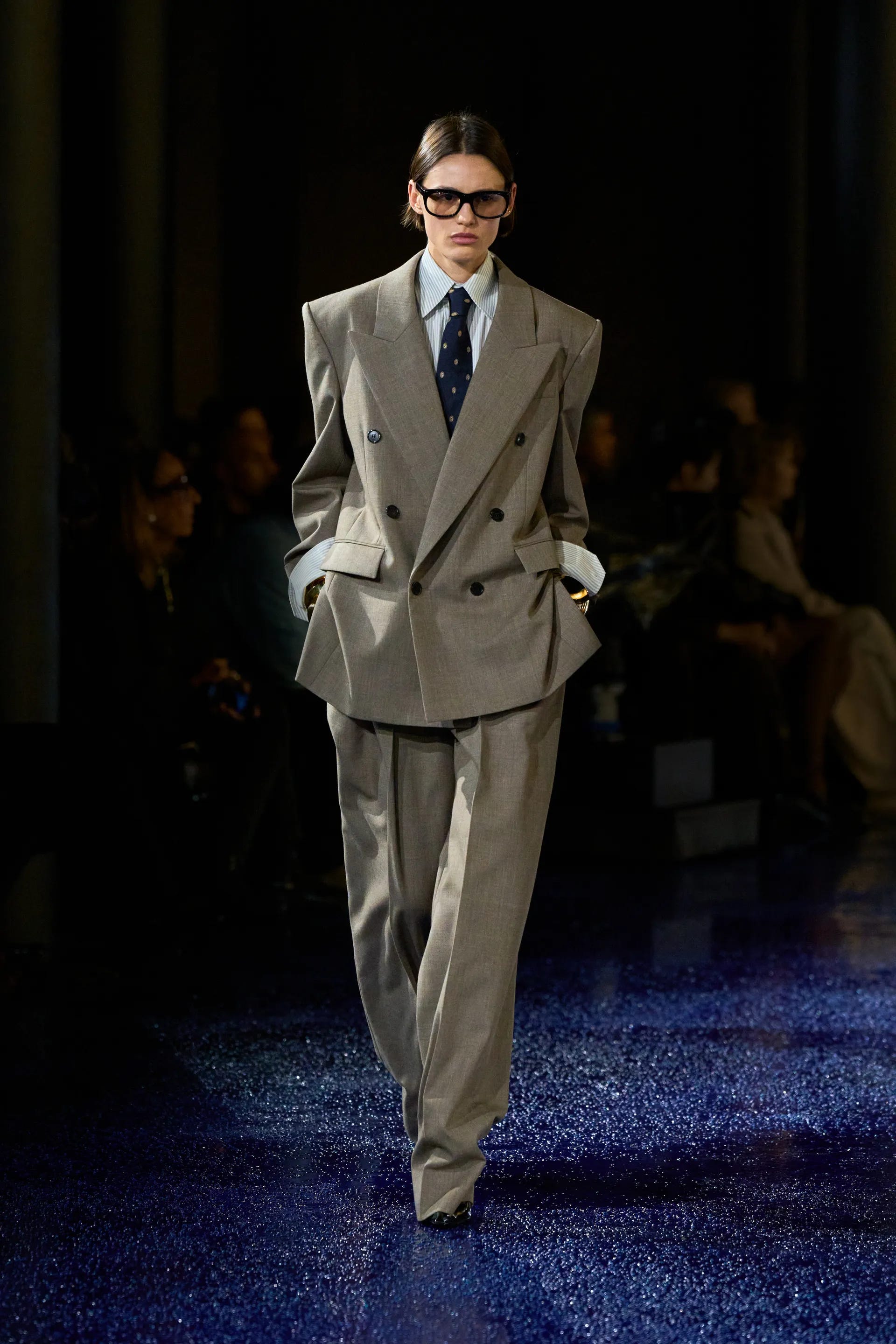
Versace, Prada, and Calvin Klein are digging into their own archives. Saint Laurent showed a full collection of oversized 90s blazers at SS25. Levi's ran nostalgia-driven campaigns and reported an 89% sales spike in 2024. New Balance, once the uncool "dad shoe," is now one of the most coveted sneakers in the world, collaborating with Aime Leon Dore and Casablanca. The shoe that belonged to your dad in 1991 is the same shoe that costs £120 and sells out in minutes in 2025.
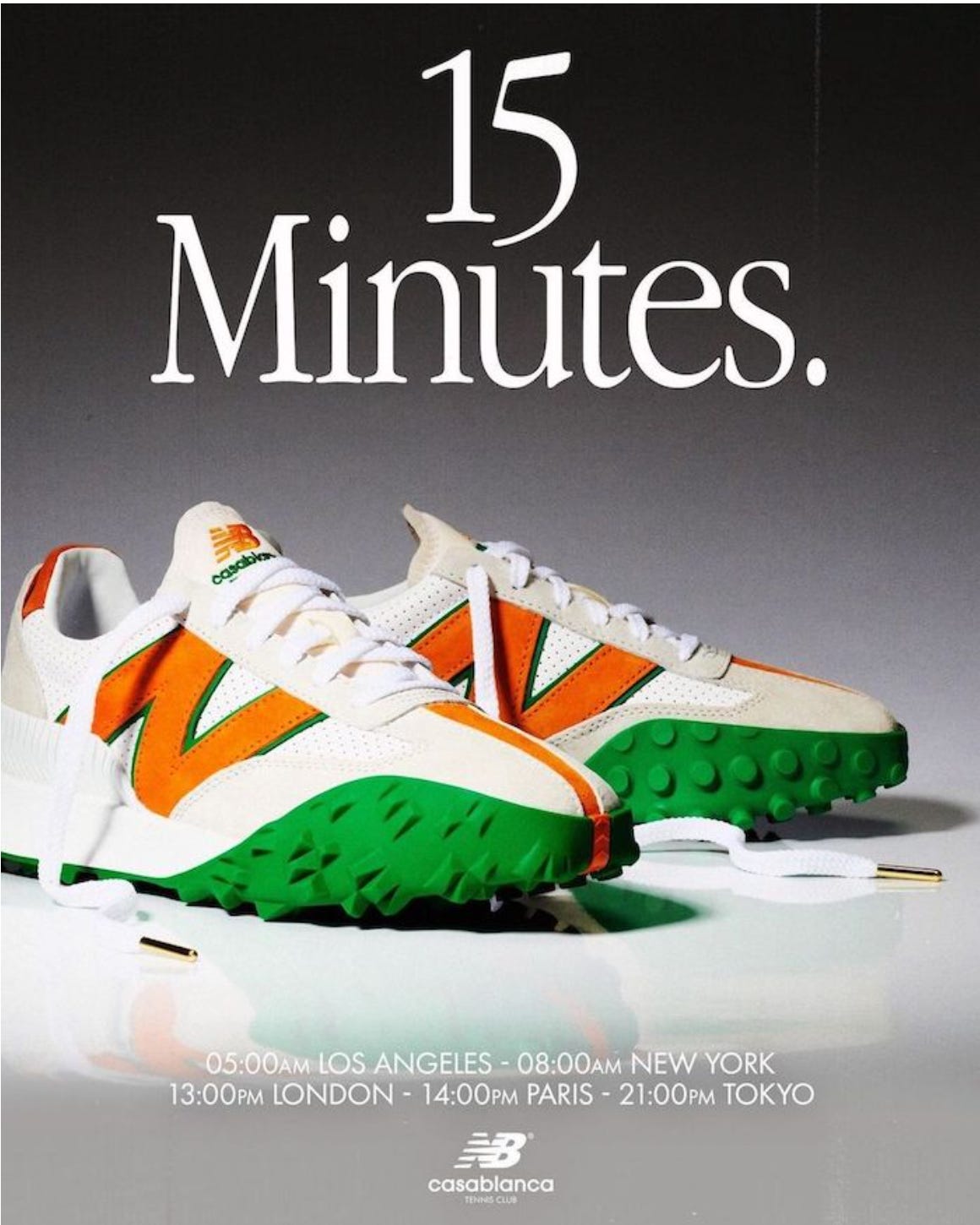
In graphic design, pick up any design publication right now, and you'll find a full-throated argument that 80s aesthetics have returned. The tight, condensed serif that was relegated to body copy a decade ago is now running large as a headline. Film grain, VHS dithering, airbrush illustration: all the textures that screamed "low budget" in the age of clean flat design are now signals of authenticity and craft. I recently re-read AIGA's deep-dive on this, and what struck me was how they traced it all the way back to 80s Apple and New Balance advertising, layered, type-heavy, text-driven layouts as a direct reaction against a decade of sleek, buttoned-up digital minimalism. We had too much whitespace; we cleaned up everything, and it stopped feeling human.
But the moment that made it impossible to dismiss as a niche creative choice happened in late 2025, when OpenAI, the world's most talked-about AI company, the literal vanguard of technological acceleration, launched its first brand campaign. And shot it entirely on 35mm film.
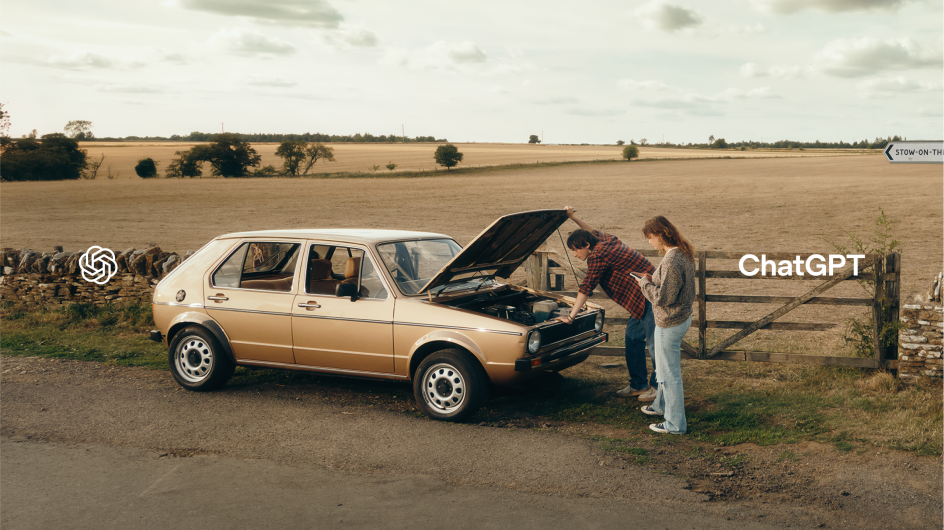
Not digital. Not AI-generated. Film. Director Miles Jay, single-take sequences, the warmth and grain of analogue photography. One of the ads featured Simple Minds' "Someone Somewhere in Summertime," a song from 1982. I remember reading about this and having a genuine moment of pause. The most futuristic company on earth chose the most analogue medium available to tell its story.
Their reasoning essentially was: AI-generated content works for social media, but for actual advertising, you need empathy and emotion, and nothing delivers that like the texture of film. OpenAI made that argument. The most forward-looking company on earth, reaching backwards to feel human.
However, millennials reaching for the familiar is legible, almost predictable. What is harder to explain, and therefore more interesting, is that Gen Z is doing the same thing for a decade they never lived through.
Homesick for a Place They've Never Been
There is a word for this: Anemoia, nostalgia for a time you have never actually experienced. It sounds like a niche psychological curiosity, but it is currently one of the most commercially potent forces in consumer behaviour.
Here’s what I found out, according to a recent NBC News poll, almost half of Gen Z adults say they'd rather live in the past. I find this study a fascinating signal in Gen Z consumer behaviour right now. There are two competing explanations, and I think both are partially true.
The first is what I’d call the borrowed cool theory. Gen Z has grown up with complete access to the cultural output of every previous decade, through TikTok rabbit holes, Spotify deep dives, thrift shops, their parents’ record collections. They’ve absorbed enough cultural residue to build an emotional association with an era, even without a personal memory of it. There’s also a social dimension: referencing something from the past signals cultural literacy. It shows you know your roots, even if those roots aren’t technically yours. There’s cultural capital in seeming like you know something you weren’t even alive for.
The second explanation reflects the same millennial craving for a simpler life. Gen Z has never known a world without digital overload, algorithmic anxiety, and constant connectivity, and what they're reaching for in vintage aesthetics isn't really a decade; it's a concept. A time before the smartphone, before the endless feed, before the relentless self-optimisation. The attraction isn't really to acid-wash denim or cassette tapes but to the idea of a life lived at a slower, more intentional pace, which is why the revival of dumb phones, vinyl records, and disposable cameras isn't aesthetic. It's philosophical. A deliberate rejection of the attention economy expressed through objects that predate it.
There's also something worth noting about what the Gen Z version of this nostalgia looks like in practice. It isn't slavish recreation, it's remix. Low-rise jeans come back, but with body-positive fits. Dad sneakers return, but in unexpected colourways. The vintage Levi's 501 becomes a one-of-a-kind thrift find rather than a mass-market purchase. Gen Z isn't trying to go back. They're using the past as raw material for something new. The nostalgia is the starting point, not the destination.
What This Means for India
India’s relationship with nostalgia has its own particular texture; for those who grew up in the 80s and 90s, the past isn’t just emotionally resonant. It was also a period of profound cultural formation, right before liberalisation in 1991 changed everything.
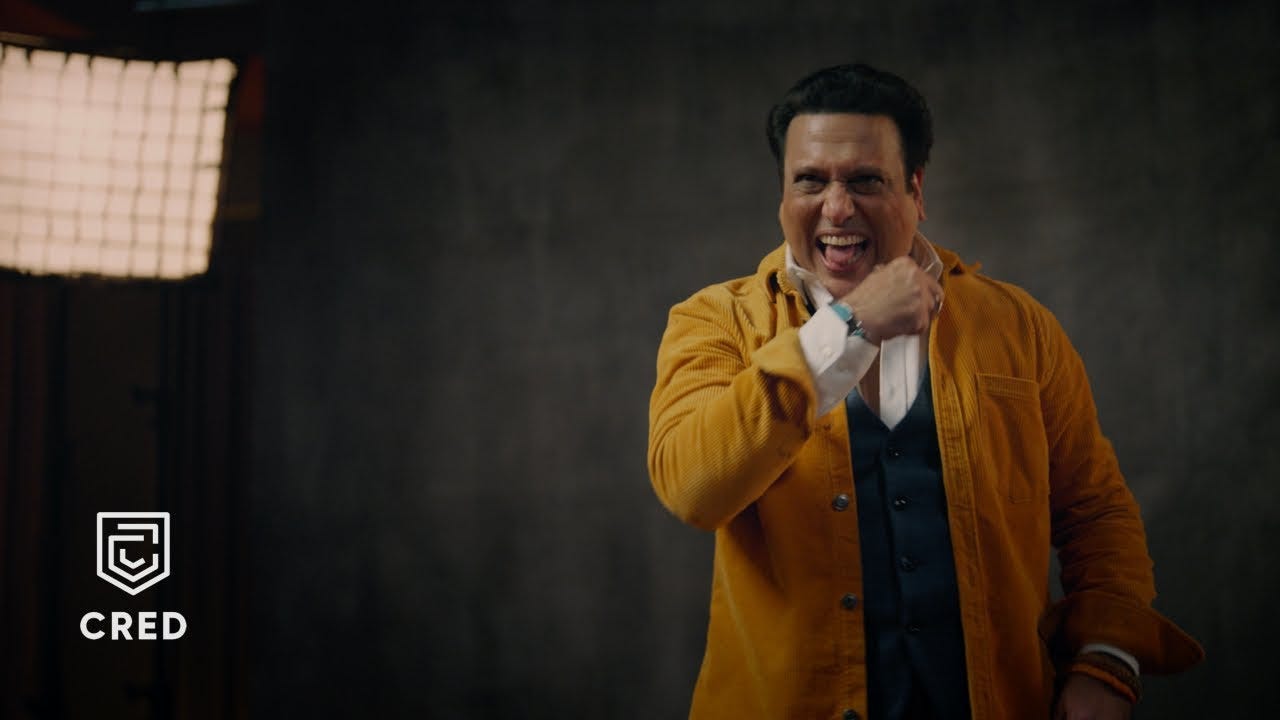
CRED understood this better than almost any other brand. Their IPL campaigns, starring forgotten 90s cricketers and parodying Doordarshan-era classics like the Nirma ad and Antakshari, went viral in the most organic way possible, because they were touching something that Indian millennials had collectively filed away and largely forgotten they still felt strongly about. It wasn’t nostalgia for a product. It was nostalgia for a whole world: Saturday morning Doordarshan, the sound of DD cricket commentary, the particular optimism of pre-liberalisation India. I remember watching those ads and feeling something shift. They weren’t selling a credit card. They were selling a feeling of recognition.
Nostalgia is becoming commercially mainstream among the Indian consumer. Doordarshan has launched Waves OTT, reformatting shows like Ramayan and Mahabharat as bingeable on-demand content. Retro snack brands are being relaunched with updated packaging because enough millennials demanded them back. Thrift platforms like Bodements and Kiabza are finding real audiences. Designers like Sabyasachi and Masaba Gupta are reintroducing retro prints and silhouettes, making nostalgia a luxury-tier choice, not just a niche one.
And then there’s what I think is the most interesting layer: the Indian Gen Z version of this trend. Indian Gen Z consumers are pulling from two nostalgia wells simultaneously. There’s the global 90s/Y2K current running through YouTube and Instagram, the same wave hitting everyone everywhere. And then there’s a specifically Indian nostalgia for pre-internet India, for the material culture of their parents’ generation: the Camlin ink bottle, the Parle-G wrapper, the Nirma jingle, the WIMCO matchbox. That’s a nostalgia for a visual tradition that is entirely their own, and it’s starting to show up in what Indian Gen Z responds to and creates.
And then there is a third layer that doesn’t get talked about enough: the diaspora. Millions of Indians living abroad carry a version of India that is frozen at the point at which they or their parents left the country. For them, nostalgia isn’t for a decade, it’s for a place. A home they know through food, through language, through the objects their parents packed in suitcases. Brands that can hold both the contemporary and the rooted, Kolhapuris that feel global, saris redesigned in a way that feels relevant, food that tastes like memory but feels modern, have an enormous and largely untapped commercial opportunity. The Indian brands that can speak to the diaspora as fluently as it speaks to domestic consumers are sitting on something very powerful. Very few have figured it out yet.
We are not regressing, we are remixing.
The nostalgia wave is not a sign that culture has run out of ideas; it’s the raw material. Gen Z is wearing Levi’s 501s with things that have never existed before. OpenAI shot on film and made the most talked-about campaign in tech history. The most forward-looking brands right now are the ones fluent in both directions simultaneously, where they come from and where they’re going.
So if you are a brand with genuine cultural roots, whether that’s a craft, a community, a geography, a regional snack that lives in collective childhood memory, a textile tradition tied to a specific soil, or a recipe that has moved through families for decades, you are sitting on something that cannot be reverse-engineered. The nostalgia moment makes that more valuable, not less. But that value is easy to squander. Slapping the same retro graphics onto packaging or copy-pasting an old typeface is not heritage or vintage is a shortcut that’ll not last. Consumers are actively seeking genuine depth and creativity now and have gotten remarkably good at sensing when it isn’t there. The brands that will win this moment are the ones with real roots and a genuinely fresh creative direction.
The good news is that some brands are already getting this right. In India, especially, a new generation of founders is building products and labels that carry genuine cultural memory and are reframing it with a fresh, contemporary eye.
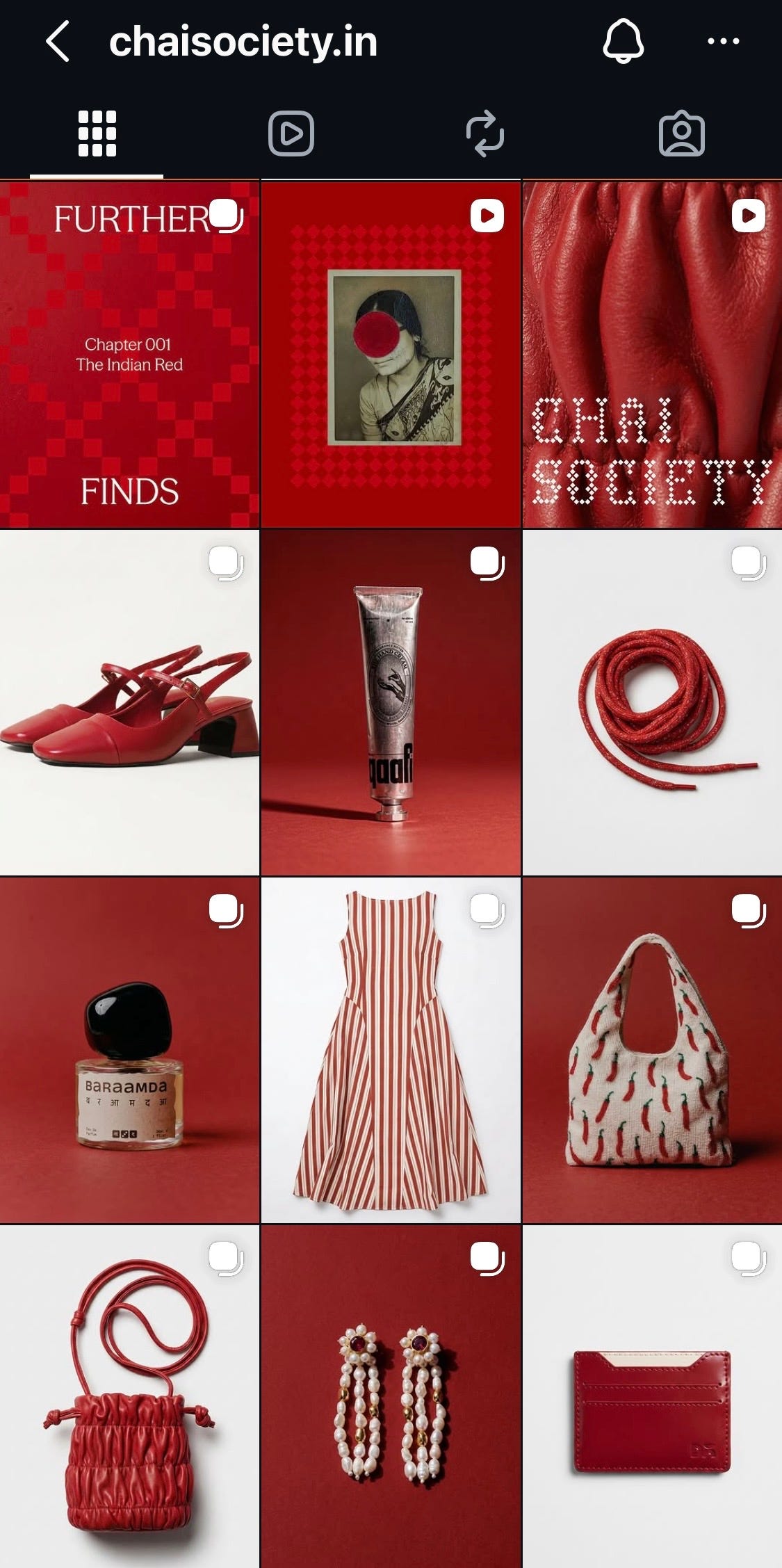
Every day, I share a new product on Chai Society, a design-led curation of homegrown Indian brands. If this essay made you think about what real provenance looks like in practice, that’s a good place to see it.
👋 Hi, I am Fatema. I work with consumer brands on design, brand strategy and creative direction. In my weekly newsletter Layer by Layer, I peel back the layers of brand, design, and culture. If this essay made you think differently about how brands are built, subscribe, and I will see you next week.
This was such a great piece! Thank you!
Great stuff!!! Thank you for putting into words (and with actual facts and research) a distant thought in my head. The Open AI example really blew me away...